
Running, Re-Defined: A Few Things I’d Tell My Younger Runner Self
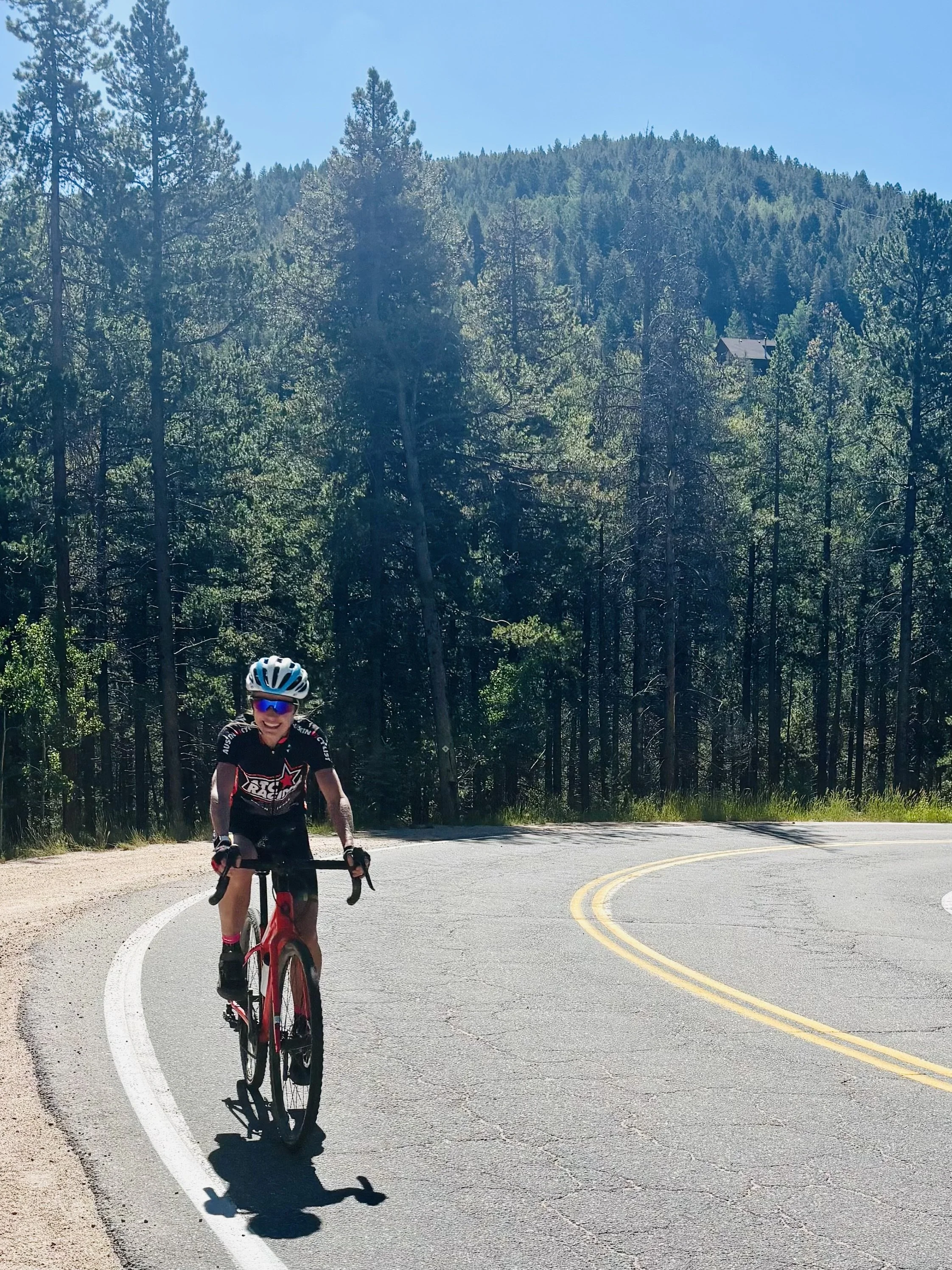
Bike Dates Are Fun
Last month, I was invited to speak with a group of runners about perfectionism and performance. As I put together my presentation, I kept thinking about my own history with running and how much I’ve changed over the 23 years I’ve been running long distances.
I’m still someone who likes to set goals and go after them. I still like training hard. I still get excited about seeing what I can do with the seasoned body I have today. I assume I always will, even as that looks different in later chapters of my life.
What has changed most is the way I think about myself as a runner.
My expectations are different. I think differently about rest, recovery, and my body. And maybe most of all, the space running takes up in my life has changed.
When I found running, it opened up a whole new world for me.
I grew up in South Florida and wasn’t raised in a family where sports were part of our lives. I didn’t play sports as a kid or have adults around me who modeled what it looked like to train and work hard for something. We didn’t really watch sports or play them. Growing up with a single mom and an older sister, we didn’t have a lot of money, and life was mostly about covering the basics. I didn’t even know this whole world of youth sports existed.
To be clear, I also didn’t feel like something was missing. I had friends I ran around with outside in the apartment complex, and even though I didn’t go to practices or travel to games, I was really active and barely stayed inside.
During college in the Blue Ridge Mountains, I was around a lot of different types of people and found a whole new world of ways to move my body. I learned to backpack, rock climb, and mountain bike, and I signed up to run a campus 5K (with zero training). It was painful, of course, and I remember crossing the finish line feeling a little curious. Running was definitely hard, but there was something about it that intrigued me.
I fell deeply in love with the mountains during college, and after graduating, I moved to Colorado to seek out bigger ones. In one of my first grown-up jobs at a Children’s Hospital, I worked with a guy who was training for his second marathon. Running 26.2 miles sounded insane for someone who was only jogging a couple of times a week for about 20 minutes around a nearby lake, but my curiosity was piqued again, and I took him up on his offer to do it with him. This time, I actually trained.
I crossed the finish line of my first of now 60-ish marathons in Fort Collins in 2003, knowing I had unlocked something that was going to become a big part of my life. Yes, it was (and still always is!) painful to finish a marathon, but I was hooked.
If you’re also an athlete with a deep love for your sport, I’m sure you can relate to the struggle to fully explain why you commit hours upon hours to something you don’t get paid for, or something that many people find crazy. I don’t have an easy answer for why I run or what it has meant to me over the years, but I can tell you a bit about the role it has played in my life.
As I mentioned, I was curious at first. Why were people doing these crazy things that often hurt? How did people run 26.2 miles (and beyond)? What was this supportive community where people willingly put themselves in uncomfortable places to see what they could do?
I was fascinated by how people could finish something that seemed so hard and walk away smiling, with stories to share that only other runners seemed to understand.
For me, that’s what first pulled me in. As I gained experience and spent more time on my feet, running took me not only further physically, but into deeper places within myself.
It gave me an outlet to sink into when life was hard. It helped me work through difficult chapters and became a way to process things when words didn’t really do much. It gave me confidence, a community, some of the best friends I still have today, and something I could work at and get better at.
When I turned 40, my life took a pretty significant turn. I was navigating life after divorce with two young kids and beginning a new relationship that would eventually lead to marriage. There was a lot changing in my world, and around that time, I also discovered how much I loved competing and seeing what I could get out of myself on race day.
My goals got bigger. The races got longer. I started chasing times and distances and seeing what I could do.
None of that was bad. A lot of it was really good, and it helped form an identity that is still a huge part of my life today.
But when something gives you so much, it can become such a big part of your identity that other parts of your life start to take up less space.
After more than 20 years of running, there are some things I wish I could go back and tell that younger version of myself.
I’m pretty sure I wouldn’t go back and do anything differently, because it was all part of the learning that built the person I’ve become. But I’m grateful to be in a place where I can step back a little and see things differently as I continue to run, race, and compete.
If I had the chance, here are some of the things I’d tell a younger Christy today.
Let’s be clear: I am no expert in any domain of life, and I haven’t mastered any of these. I still move in and out of all of them, and I tend to be a slow learner in some categories. I imagine I always will be. But that doesn’t mean I stop trying. Maybe sharing these is another way for me to keep learning and growing in this phase of life.
Take what you will and leave what doesn’t fit.
You probably don’t need more grit.
I used to think grit was almost always a good thing. If you’re part of the endurance community, you’ve also probably bought into the idea that digging deep means pushing through at all costs.
The word endurance often brings up images of suffering, perseverance, and never backing down. It is not rare to show up at a start line and see runners with KT tape stretched across various muscle groups, find yourself limping through a long run, and struggle to pull the plug when the sirens are blasting out, asking you to surrender.
Keep going. Push through. Don’t quit. Do the hard thing.
I have plenty of those mantras taped to the walls around my treadmill, and I still believe in them. They’re incredibly useful when I’m in the middle of doing something hard and my brain is telling me to quit.
But I’ve learned to be a little more nuanced about what I’m pushing against.
Sometimes, especially when we have big goals, we really do need to learn how to push harder. I’m still working on that myself. I’m chasing another marathon PR, and there are plenty of workouts where I’m still learning to decipher the difference between discomfort I can work through and pain that tells me I’m working against myself.
I believe it can be tempting to overvalue grit, especially for people who are already incredibly driven. For some of us, the problem isn’t that we need to learn how to push harder. It’s actually learning when pushing harder isn’t actually helping.
Grit can become a convenient way to ignore what your body is telling you, keep going when something needs to change, or convince yourself that suffering is required.
Yes, sometimes mental toughness looks like continuing.
But there are times when the grittier thing to do is to stop.
I wish I had understood that sooner.
Your body gets a vote.
Training plans, goals, and data are all helpful. But none of them know what is happening inside your body on a particular day.
Your body gets a vote, too.
This is something I’ve been working on with my sports psychology coach. Last Spring, after experiencing significant burnout from work and life stress, along with some health concerns that really forced me to slow down, she challenged me to think about what it would look like to treat my body with the same kindness, patience, and compassion I would offer one of my kids when they’re struggling. It was a shift in perspective for me—learning to truly listen to my body, recognize what it needs, and give myself the same grace I so readily extend to the people I love.
That idea has stuck with me. It’s helped me pause before automatically pushing through when I’m sick, injured, or dealing with deep fatigue.
How often do we treat our bodies like they’re the problem?
We get frustrated when they don’t cooperate. We push harder when they’re tired. We get angry when something hurts or doesn’t perform the way we think it should. Sometimes we even go looking for the answers we want when, somewhere deep inside, we may already know what our body is asking for.
Rest.
And sometimes our bodies aren’t whispering. They’re shouting.
I’ve gotten better at understanding that listening doesn’t mean giving up. It means respecting the information I’m getting.
Changing the plan doesn’t mean you failed the plan. Taking a day off doesn’t erase the work you’ve already done.
The plan is a tool. It isn’t the goal.
loving your family doesn’t mean losing yourself
I’ve had people subtly (and not so subtly) imply that once you have kids, some of the things you cared about before them should no longer take up space.
And I deeply understand that life changes when you have a family. Of course it does. And it should.
There have been seasons when running took a back seat because my kids needed more of me. I never questioned that. Being a mother is an identity I’m incredibly proud of. I’ve missed workouts, skipped races, and had times when training simply wasn’t the priority.
I’ve been more than okay with that because my family is the most important thing to me. And at the end of the day, it really is “just running.”
But loving my family doesn’t mean I have to give up the parts of myself that matter to me.
For me, that has meant finding ways to keep running, training, and racing while also being at the games, showing up for my kids, and being part of their lives. I can be a mother who is deeply invested in my kids and also a person who has passions and goals outside of them.
I love that my kids have had the chance to see me living out a passion that has accompanied me for most of my adult life. They’ve also seen the sacrifices I make to stay engaged with all the things that matter to me, including the things that have nothing to do with them.
I hope they see that you can love your family deeply without losing yourself in the process.
Bigger, Longer, Harder Isn’t Always Better.
Last summer, after coming back from surgery the year before, I was intent on returning to race the Leadville Trail 100.
Somewhere along the way, I had come to believe that returning to running meant returning to crazy-long distances and doing the hardest things I could. Getting back to 100 miles felt like proof that I could still be that kind of runner.
But as I ramped up my training, I realized I wasn’t enjoying it the way I used to.
I was spending hours on the trails, often before my kids were even awake, and I found myself just wanting it to be over so I could get home and do something else. It was starting to feel like a job. A “have-to”.
And we all know there are plenty of things in life that fall into that category already. Running should not be one of them. I want it to be an “I choose to.”
There were many years when spending hours in the woods was incredibly fulfilling. I just wasn't getting the same thing out of it anymore.
My kids are getting older. I want to be more engaged with them. I want to be around for more of this part of their lives because time is moving fast.
And I realized I could want that without giving up running.
Leadville is especially complicated for me because it holds so many good memories.
I’ve run it in completely different chapters of my life. I did it once when my son was just ten months old, barely making the final cutoff. Another time, I was 40, newly dating Mike, and incredibly excited about all the new chapters opening up in my life. I had the race of my life that year, surprisingly landing on the podium after sharing so many miles of trail with people who were there to support me, both on and off the trail.
So much of my running life felt wrapped up in that race and those mountains.
This past August, I was back at Leadville, pacing and crewing for a good friend.
I loved being there. I loved being part of it. I loved watching someone I care about take on something that means so much to her.
I just didn’t find myself wishing I was the one running.
I still love the race and have incredible memories there. I can still be part of it.
I just don’t want to do it myself anymore (right now:)
That doesn’t mean I’m less of a runner. It means my life has changed, and what I want from running has changed with it.
from “can i?” to “do I want to?”
This one is related to number 4, but there’s a distinction I’m still learning to make.
I’ve spent a lot of years proving to myself that I can do hard things, and I’m glad I did. Those experiences have informed so much more about how I live my life than just my running times.
There is something powerful about finding out what you’re capable of and then finding out you can probably do a little more.
But eventually, I think the question changes.
It’s not always Can I?
Sometimes it’s Do I want to?
Those are very different questions.
I’m still choosing to do hard things. I’m still chasing times that matter to me, even if they don’t matter to anyone else.
But I don’t need every goal to be harder than the last one, or to take something on simply because it’s hard.
I’m doing these things because I want to see what’s still possible, not because I need to prove that I can.
making room for a bigger life
For a long time, when I was training for something, other activities had to fit around running, or they didn't happen.
I still care deeply about my training. I still follow the weekly training plan Mike makes for me, which is taped to the fridge, and I’m excited most days to see what I can do.
But I’ve also fallen in love with my bike. Last summer, Mike and I took the rare vacation to Spain that didn't revolve around a race, and we loved every minute of eating, walking, and exploring. I skied with the kids last winter, loved it, and plan to do it again this year, even while continuing to race.
I want to keep doing things that have nothing to do with running. They give me new experiences, let me enjoy time with the people I love, and remind me that I'm still growing and evolving outside my running shoes.
I used to see those things as taking something away from my training. Now I see them as part of having a bigger life.
I can take my running seriously without taking every single workout so seriously.
And as I make room for other things, I’ve found that I tend to love running more, too. I don’t need every activity to serve my running goals for it to have value.
Your body needs more than miles.
I wish I’d understood this earlier.
Thankfully, I’ve never had a particularly complicated relationship with food. I ate decently and never got caught up in counting calories or “good and bad” food. What I didn’t always understand was how much I actually needed to eat to support the activities I was asking my body to do.
Looking back, I was definitely underfueling more than I realized. I was tired on most runs, losing steam toward the end of races and hard efforts, and even getting cranky when training reached higher levels. I was stubborn about paying attention to this and just kept doing what I had always done.
Mike had been pointing this concern out to me for years, but it’s only in the past year or two that I’ve really started to embrace the change.
I eat more now than I ever have, and I also feel healthier than I ever have. My energy is better. My mood is better. And even my performance is better. Not a shocker, I’m sure, but at almost 50, it’s hard to believe this one took me so long!
The more I’ve learned about endurance training, the more I’ve realized that eating enough and eating well aren’t separate from performance. They’re part of it.
The same goes for rest and recovery. Rest isn’t a reward for working hard. We know its necessary for performance and adaptation, but its also necessary for sustainabilty for the long haul.
If you want your body to do hard things for a long time, you have to take care of it along the way.
a big part of your identity, not your whole identity
Running has been a really big part of my life.
It’s where I’ve found challenge, community, purpose, friendships, and a lot of joy. It’s also where I’ve learned a lot about myself.
I met my husband while training for the Leadville 100. Running has shaped our family and a lot of our life together.
So this isn’t about saying that running doesn’t matter to me anymore.
It does.
But something can be incredibly important to you without having to define all of you.
You can care deeply about your sport, pursue big goals, and continue to challenge yourself while letting other parts of your life take up more space.
And maybe that’s the biggest thing I’d tell my younger self:
You don’t have to become less ambitious.
You just get to decide what you want your ambition to look like in this stage of your life.
looking ahead
At 49, I'm in a year full of milestones. This year we celebrated my husband turning 50, my daughter turning 13, and my son recently turning 16. I’m approaching 50 next summer, and there is a lot of life happening all at once.
Thankfully, my health has allowed running to still be part of that picture.
This December, I’ll line up for another marathon, still chasing a personal best that I believe I can achieve.
And I’m incredibly excited about it. I still want to see what I’m capable of.
Maybe that’s what this stage of life has given me: the ability to let some things go without feeling like I’m giving something up. To recognize when something no longer fits while making room for the things that still get me out the door.
I don’t know exactly what running will look like in this next chapter.
But as I move through 49, I’m pretty excited to find out.
